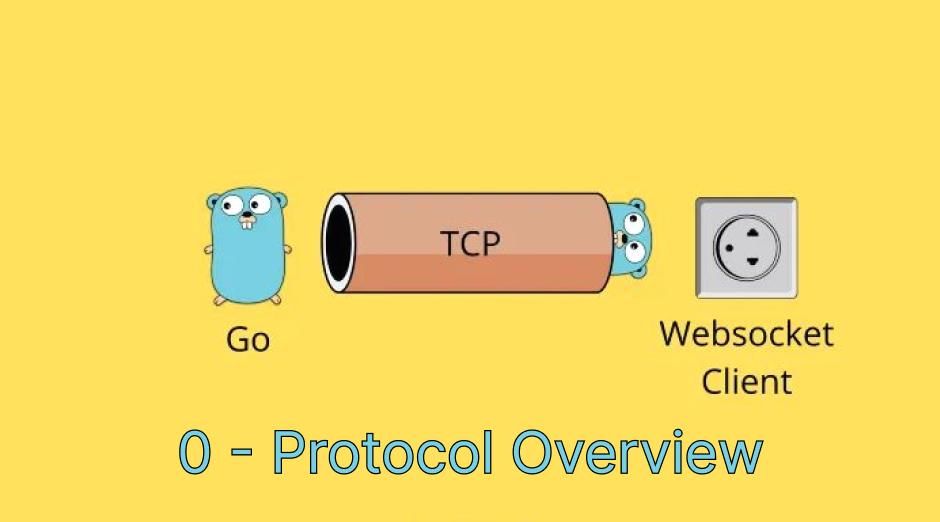
Websocket: Introduction
Movitation
Yesterday I hit a wall when using websockets library in x/net for golang. I
decided to make my own (very simple) server implantation for WebSockets protocol
starting from TCP 🥁.
The wall was that for some reason that I don’t know, whenever I try to pass the socket to a goroutine it was just closing the connection without a clue, after many trials I gave up on the library. 🤐
So, I went to the WebSockets RFC6455 and started the implementation from source, reading an RFC isn’t very straight forward but that was going to be another practice for me. I previously implemented TFTP and UDP from the RFC directly before. Not an easy task, but a fun one. 🤽
Through the next posts, I’ll be sharing my pitfalls during reading and implementing the RFC starting the from the next post, I’ll just give a light overview about the protocol.
What is this WebSockets?
WebSockets is a protocol that allows two-way communication (bidirectional), between clients and servers. This means both clients and servers can send and receive messages.
Why is Websocket protocol important?
WebSockets is a major enabler for chat applications.
Since WebSockets is a bidirectional communication protocol, it adds a missing functionality to basic HTTP in an efficient way. HTTP is a request-response protocol, clients can’t easily receive “events/updates” from the server without requesting it. This is wasteful when it comes to resources on the server.
How do they work?
Well, websockets tries not to be an intruder protocol that breaks things, so it starts its connection as an innocent HTTP/1.1 with a special type of GET request called Upgrade. This is the very first request that’s sent to the server to initiate a Websocket connection. After that, the system socket is left open with the server for communication going both ways.
What happens rest will come later isA 👀